Our Investment in Higgsfield AI: Powering the Future of Video Creation
Video has always been one of the most important forms of content on the internet, and also one of the hardest and most expensive to produce. Generative AI has changed that equation.
Consumers already spend an enormous amount of time watching video, and businesses spend hundreds of billions of dollars every year creating content for advertising, social media, e-commerce, entertainment, training, and communications. As AI lowers the cost of producing video, we expect much more of it to be created.
Some of that will replace work that is done manually today. But the bigger opportunity is in content that simply doesn't get made today because it is too expensive or takes too long. A brand that produces 20 variations of an advertisement could produce 2,000. A small business that rarely creates video could create it every week. An individual creator is now equipped with the resources to create a high-production-quality video in minutes.
Video generation will be a massive market. It also creates a surprisingly complicated technical problem.
There are now dozens of increasingly capable video and multimodal models that are good at different elements. Some are better at photorealism. Others excel at motion, character consistency, camera control, lip synchronization, image-to-video, editing, or various visual styles. New models appear constantly, and the best model for a particular task today may not be the best model six months from now.
Producing a good video often means using several of these capabilities together. It can involve multiple generations, retries, editing steps, and models, all while managing latency and a potentially substantial inference bill. Users shouldn't have to think about any of this.
That's one reason we found Higgsfield particularly interesting. We don't think of the company as simply another application sitting on top of video models. Higgsfield is building what we think of as AI harnesses for video.
Higgsfield’s platform abstracts away much of the complexity underneath. Instead of requiring users to figure out which models to use and how to stitch them together, Higgsfield can orchestrate models and workflows on their behalf. Different models can be used for the elements they do best, while the user interacts with a much simpler product. And as more content is created through the platform, Higgsfield can build a powerful feedback loop: learning from how users generate, iterate on, and select outputs to improve orchestration and, over time, potentially produce better results from better data. This becomes more valuable as the model ecosystem gets more fragmented.
It is tempting to assume that better foundation models eventually make the application layer less important. Video may develop in the opposite direction. If there are many great models, each improving rapidly and with different strengths, deciding which model to use, when to use it, and how to combine it with other models becomes a meaningful problem in its own right. Higgsfield doesn't have to predict which video model ultimately wins. It can incorporate the best capabilities as they emerge.
What really got our attention, though, was how quickly the product was being adopted.
Higgsfield's annualized revenue has grown from roughly $20 million a year ago to more than $700 million today. The company has more than 30 million users across 238 countries and territories, and 390 of the Fortune 500 are already using the product. We don't see growth like that very often.
We were also struck by the breadth of the usage, particularly the traction Higgsfield is already seeing in the enterprise. Higgsfield can be used by an individual making content for social media, but the same underlying platform can be used by large companies to produce and test creative at a scale and speed that would have been prohibitively expensive with traditional production workflows. That gives the company an opportunity to participate in both the enormous consumer creator market and an even larger enterprise opportunity.
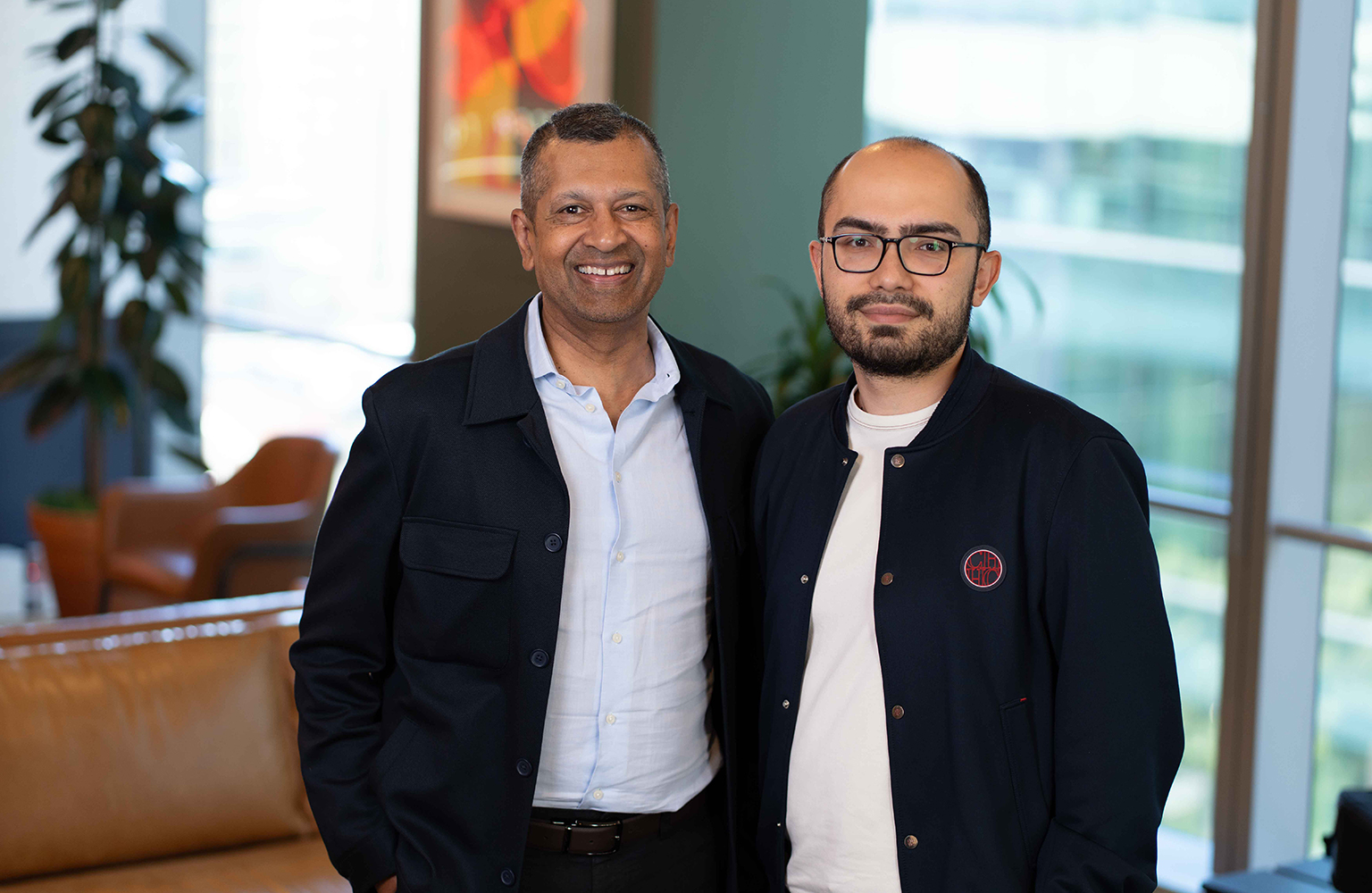
Finally, there is the team. We came away from our time with the Higgsfield founders impressed by their combination of technical depth, product instinct, and experimentation speed. There is a strong founder-market fit here. They understand the underlying AI and inference problems, but they are equally obsessed with turning that technology into a product people actually want to use.
At Intel Capital, we spend a lot of time thinking about where durable companies will be built as foundation models continue to improve. We believe orchestration is an important part of that answer, particularly in complex, compute-intensive modalities like video.
Video generation is getting dramatically better. The number of AI models is exploding, each with different strengths across generation, editing, motion, sound, and creative control. As the amount of video the world creates grows, there is an opportunity for a defining platform that brings the best of these models together into a single, seamless experience for consumers and enterprises.
We believe Higgsfield is exceptionally well-positioned to become that defining company and are excited to partner with the team as they enter this next phase.