GTC 2026: Inside the AI Revolution—And How Intel Capital’s Portfolio is Leading the Charge
Introduction: The Week That Transformed Silicon Valley
There's a certain electricity that fills downtown San Jose every year when NVIDIA's GTC conference rolls into town. But this year felt different. With over 30,000 AI enthusiasts descending on the city, roads closed, parking lots overflowing, and robots literally roaming the streets, GTC 2026 wasn't just a conference, it was a movement.
Jensen Huang took the stage and made a declaration that sent ripples through the industry: computing demand has increased by one million times, and NVIDIA projects at least $1 trillion in compute revenue from 2025 through 2027. We're not talking about incremental progress anymore. We're witnessing a fundamental reshaping of the global technology landscape.
Intel Capital was there, right in the heart of it all.
Our GTC Networking Lunch: Where the Conversations Happened
We hosted our annual Networking Lunch at an amazing location in downtown San Jose, bringing together portfolio founders, industry leaders, and partners. The energy was electric, matching the buzz of the conference itself.
Yes, there was the legendary GTC chaos: road closures that turned a 10-minute drive into a decision about when to jump out of an Uber and just walk it, transit alerts flooding everyone's phones, and that unique experience of trying to find parking when 30,000 people have the same idea. But honestly? We wouldn't have it any other way. That chaos is a sign of something remarkable happening, an entire industry converging to shape the future. Downtown San Jose was AI central.
What made our lunch special wasn't just the venue or the food. It was the conversations. Portfolio company founders sharing insights with enterprise CIOs, AI leaders and practitioners. Infrastructure architects debating the future of AI factories. And everywhere you looked, the same themes kept emerging, themes that Jensen had just articulated on the main stage. And yes Agents—how you build them, what you use them for, and how to secure them.
The Five Pillars of GTC 2026: Where Our Portfolio Fits
As we reflect on the conference, five major themes crystallized, and our portfolio companies are positioned at the intersection of each one.
1. Agentic AI: The New Operating Layer
"Every single company in the world today has to have an OpenClaw strategy." When Jensen said those words, he wasn't exaggerating. The OpenClaw and NemoClaw frameworks represent NVIDIA's vision for AI agents that can reason, plan, and act autonomously. This isn't about chatbots answering questions, this is autonomous AI that executes complex business processes.
Our portfolio company Moderne is building exactly the infrastructure these agents need. Their OpenRewrite Lossless Semantic Tree provides the knowledge, discovery, and execution tools that coding agents rely on. As Jensen noted, "coding is business processes," and Moderne is architecting that future.
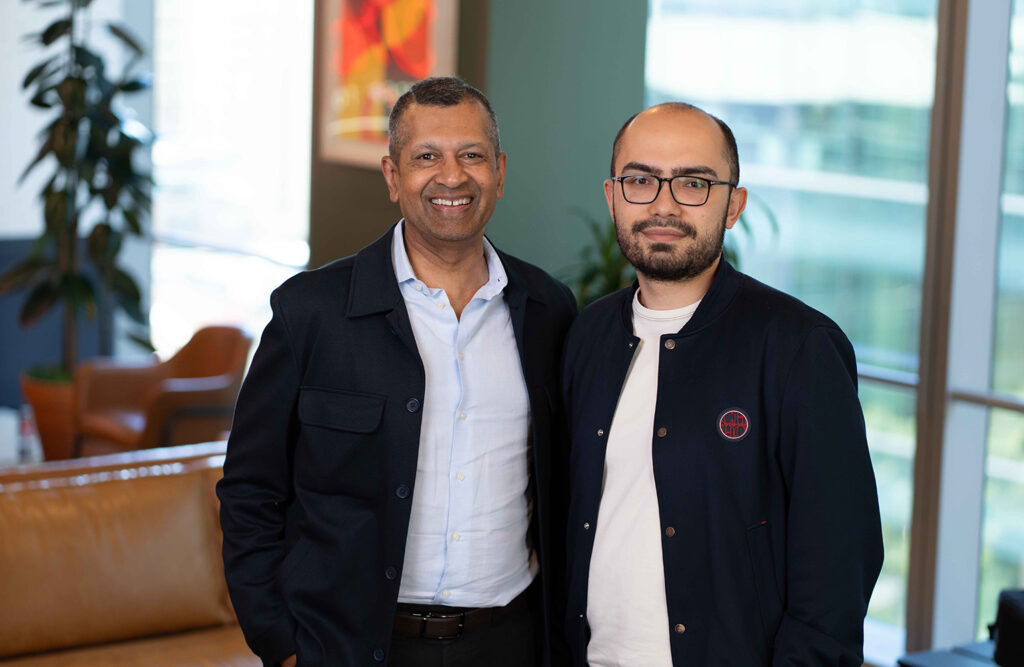
TrueFoundry is tackling another critical piece: governance. As their CEO Nikunj Bajaj told us: "Enterprises are moving beyond experimental chatbots to embedding GenAI into core, high-value workflows. As stakes rise, so does the need for control. Teams are actively seeking stronger guardrails, observability, and governance to confidently manage risk at scale."
And when autonomous agents are making decisions, security becomes paramount. That's where Tuskira comes in, with their Preemptive Cyber Defense Platform powered by Agentic AI, directly addressing the security governance challenges that come with letting AI act independently.
2. The Inference Inflection: From Training to Deployment
GTC 2026 marked what many are calling the "inference inflection point"—the moment when the industry shifts from training models to deploying them at massive scale. Data centers are becoming "AI factories" or "token factories” and the metric that matters is tokens-per-watt.
MinIO emerged as a star at GTC, named as a key NVIDIA partner for the BlueField,4 STX Storage Architecture. Their AI-native storage infrastructure is becoming the backbone for these AI factories. As Co-CEO Garima Kapoor put it:
"AI is being reshaped by data as much as by models. The infrastructure that succeeds in this era won't be retrofitted for AI; it will be architected for it."
Anyscale's Ray platform was listed as a NVIDIA ecosystem partner for the RTX PRO 4500 Blackwell Server Edition, powering AI workloads across enterprise deployments. And RunPod's GPU cloud platform is enabling the inference scaling that Jensen described—supporting the workloads that will define AI's next chapter.
3. Physical AI: When Software Meets the Real World
One of the most visually stunning aspects of GTC 2026 was the physical AI demonstrations. Jensen showed that "everything on display had been simulated, not pre-rendered", a testament to NVIDIA's Omniverse and Cosmos platforms bringing AI into the physical world.
FieldAI was featured at GTC, demonstrating their Field Foundation Models that enable different robot types to autonomously navigate real, world environments without maps, GPS, or predefined trajectories. Their “embodiment agnostic autonomy brain" is exactly what the physical AI revolution requires, robots that can think and adapt in dynamic conditions.
Twelve Labs is contributing to this ecosystem with video-language models that align with NVIDIA's Cosmos vision, enabling semantic video search and classification for training data generation. And Bria AI is supporting enterprise content creation with visual generative AI that comes with complete IP indemnity and EU AI Act compliance.
4. Sovereign and Confidential AI: Trust at Enterprise Scale
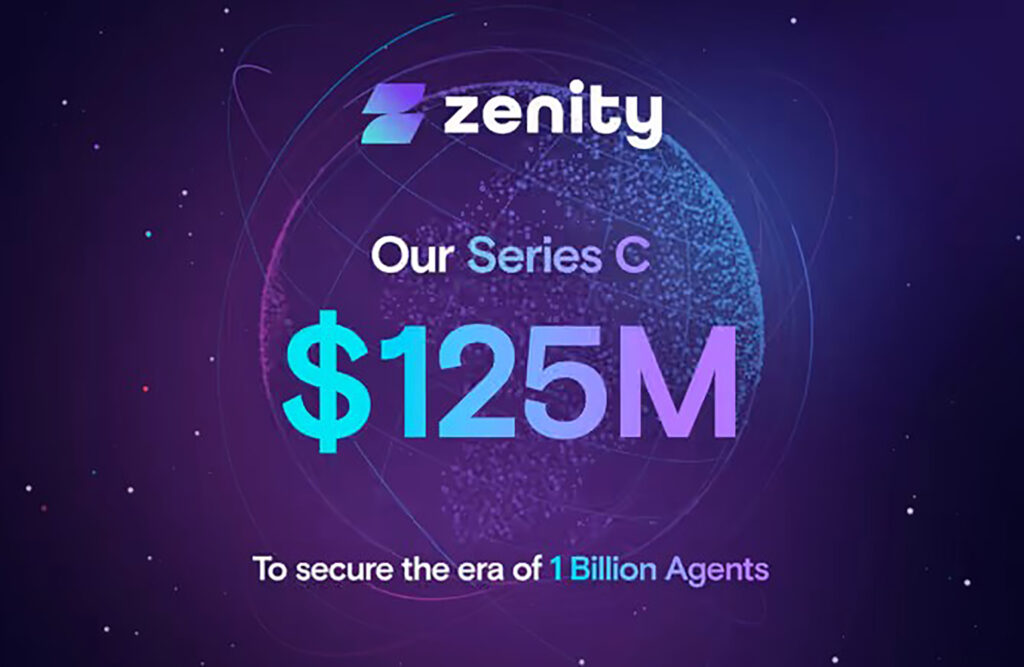
Jensen framed governance and security as table stakes for enterprise AI; without them, there’s no trust at scale. That’s exactly where tools like Zenity and Immuta matter: Zenity helps teams set and enforce guardrails for agent behavior, while Immuta brings policy-driven data governance into the AI workflow. In other words, the policy engine is only as strong as the controls behind it. In production, hardware-enforced security and governance aren’t “nice-to-haves”; they’re requirements.
Fortanix was an exhibitor at GTC (Booth #3117), showcasing their Confidential AI platform. Their CEO Anand Kashyap crystallized the challenge: "AI leaders know that if admin access is compromised, the entire AI estate, models, prompts6, and data, can be at risk. Fortanix Confidential AI enables enterprises to scale AI with confidence."
Articul8 is addressing similar needs with their infrastructure-agnostic GenAI platform, enabling sovereign AI deployment while transforming customer data into actionable insights.
5. AI Factories: The $1 Trillion Opportunity
Jensen's projection of $1 trillion in revenue through 2027 comes from the buildout of gigawatt-scale AI infrastructure. This is the new industrial paradigm, and our portfolio is positioned to enable it.
MinIO's partnership with NVIDIA means their AIStor platform is delivering exascale performance for these AI factories, unifying enterprise data across edge, core, and cloud. NexGen Cloud and Nebius (a cloud partner for NVIDIA's Open Physical AI Data Factory Blueprint) are providing the GPU infrastructure to support this massive compute expansion.
The Portfolio Companies That Joined Us at GTC:
Our networking lunch brought together an incredible group. From our portfolio:
- MinIO — AI-native object storage built for high-performance, exascale data infrastructure powering modern AI factories; the company that's becoming NVIDIA's storage partner of choice for AI factories.
- FieldAI — autonomous robotics software and foundation models that enable robots to navigate and operate in complex real-world environments.
- Fortanix — Confidential AI and data security platform that protects sensitive data, keys, and workloads using hardware-based enclaves and centralized key management.
- Anyscale — the company behind Ray, helping teams build, run, and scale distributed AI applications from training through inference; Co-founder Robert Nishihara brought insights from the Ray ecosystem's growing NVIDIA integration.
- TrueFoundry — an enterprise ML/GenAI platform focused on deployment, observability, and governance so teams can ship models and agents safely at scale.
- RunPod — a GPU cloud platform for training and inference that makes scalable compute accessible and cost-effective for AI teams.
- Bria AI — enterprise-grade visual generative AI built for commercial use with licensing controls, IP safeguards, and compliance features.
- LILT — an AI-powered translation and localization platform that helps global teams produce multilingual content faster with human-in-the-loop quality.
- Articul8 — an enterprise GenAI platform for building and deploying domain-specific AI applications securely across infrastructure environments.
- Immuta — a data provisioning platform that automates and governs secure access to enterprise data, with Agentic Data Access enabling real-time policy enforcement for AI agents.
We were also joined by industry leaders from Microsoft, Akamai, NXP, NetApp, Deloitte, Nebius, Colt Telecom, NexGen Cloud, Tech Mahindra, Cadence, Nike, State Farm, Wells Fargo, J.P. Morgan, Cisco, Broadcom, Investment NSW, and many more. The cross-pollination of ideas between startups and enterprises is where the magic happens.
Looking Ahead: What GTC 2026 Means for the Future
If there's one takeaway from GTC 2026, it's this: we've moved from the era of AI experimentation to the era of AI deployment. The infrastructure is being built. The frameworks are maturing. The enterprises are ready.
Intel Capital's portfolio is positioned at the center of this transformation—from the storage layer (MinIO) to the compute layer (Anyscale, RunPod) to the application layer (TrueFoundry, Moderne) to the security layer (Fortanix, Tuskira) to the physical world (FieldAI).
The conversations we had at our lunch about infrastructure, governance, and what's actually working in production, reinforced our conviction: the companies building the unglamorous but essential layers of the AI stack are the ones that will define the next decade.
Conclusion
GTC 2026 marked the end of the AI honeymoon phase. The industry is no longer debating whether AI works. The hard questions now are about where it can be deployed, how it is governed, and who can operate it reliably at scale and how much of the legacy SW market will it devour. This is a structural shift, not a cyclical one, and it fundamentally changes how value is created across the technology stack.
AI is not simply replacing software. The strongest incumbents are using AI to build, and embedding AI deeply into their products, raising the bar for everyone else. At the same time, the cost of building software is falling fast. That combination compresses time to market and erodes superficial advantages, putting relentless pressure on companies to innovate faster and differentiate more clearly.
In this environment, durable advantage comes from strategic moats beyond code: proprietary data, distribution, deep workflow integration, trust, and outcomes that matter to the business. Governance, security, and infrastructure are not secondary concerns. They are the foundation that determines whether AI creates real impact or stalls in production.
Intel Capital’s portfolio reflects this reality. These companies are not chasing demos. They are building the systems that make AI usable in the real world: AI factories, inference infrastructure, agentic platforms, confidential computing, and physical autonomy. The next decade of AI will be defined not by who ships the flashiest model, but by who enables enterprises to deploy AI safely, efficiently, and at global scale.
Thank you to everyone who joined us in San Jose. The traffic was worth it. The parking struggle was worth it. Being part of this moment in technology history? Absolutely worth it.
See you at GTC 2027.